
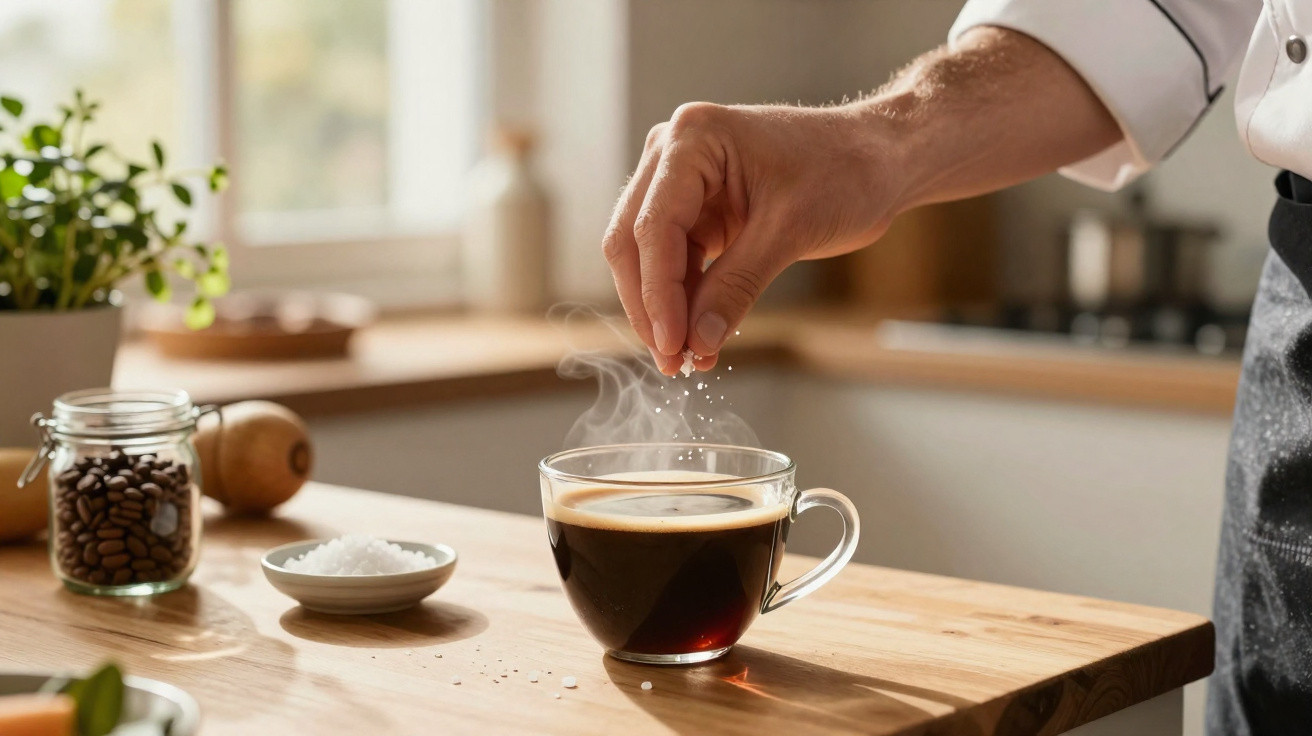
Why a pinch of salt changes your cup
Há dias em que o café parece uma sobremesa discreta: chocolate, pão torrado, tudo no sítio. Noutros, fica agressivo - fino, amargo - e nem o leite nem o açúcar conseguem pôr ordem na chávena. Um chef que conheci dizia que, antes de trocar de grão ou comprar mais um “gadget”, há um ajuste minúsculo e inteligente. Cabe entre dois dedos, dissolve-se num instante e costuma estar mesmo ao lado do fogão. Sim: sal.
O café estava barulhento como as manhãs sabem ser - vapor a chiar, portas a tocar, gente a agarrar o tempo em copos de cartão. O chef entrou atrás do balcão com aquela confiança de quem passa do grelhador para a bancada sem mudar de ritmo e pousou um pires com sal em flocos junto ao moinho. Fez um pour-over normal, nada de especial, e deixou cair uma pitada quase invisível no fluxo. O barista arqueou uma sobrancelha; os habituais inclinaram-se para ver. Provei. E, sem dar por isso, relaxei os ombros. Há truques simples que viram um hábito do avesso em segundos.
Bitterness in coffee isn’t evil. It’s part of the backbone, the thing that keeps sweetness from going syrupy. When it takes over, though, everything feels harsh and hollow. A pinch of salt softens that edge at the receptor level on your tongue and brings the quieter flavors forward. Notes you missed-almond, cocoa, baked orange-suddenly step into the light. The drink doesn’t lose character. It gains calm.
Think of over-extracted diner coffee, the kind that sits on a hot plate too long. Or a dark roast brewed fast for a commute. That dry, lingering bite is what many people push down with sugar or cream. A chef’s pinch of salt works differently. It turns down the “bitter” volume without turning up sweetness to cloying levels. Roughly two-thirds of adults drink coffee daily in many countries; plenty of them battle bitterness with sweeteners. Salt reroutes the whole conversation in your mouth.
Here’s the logic in plain language. Sodium ions suppress certain bitter receptors and heighten perceived sweetness and roundness, even though salt isn’t sweet. It helps flavors feel integrated, especially when water is hard or the roast leans dark. On a chemical level, some bitter compounds-like chlorogenic acid lactones and phenylindanes-shout louder than others. Salt lowers the shout. Your brain gets a clearer picture of the rest: oils, caramelized sugars, gentle acids. **It’s not a cover-up trick-it’s a rebalancing act.**
How to try it without ruining your mug
Start with the tiniest pinch-truly “chef pinch,” not “grill pinch.” For a 10–12 oz mug, think a few crystals, about 1/16 teaspoon or less. You can sprinkle it into the grounds before brewing or tap it into the finished cup and swirl. If you like precision, mix a small bottle of 20% saline (20 g fine salt in 100 ml water) and add 1–2 drops to filter coffee or 1 drop to espresso. That keeps your hand honest.
Common mistake number one: adding enough salt to taste salt. That means you’ve gone too far. Also easy to overdo with coarse flakes, since they dissolve slowly and trick your timing. Go smaller than you think and test with a few sips as the cup cools. Let’s be honest: nobody really does that every day. But the day your beans taste off, this tiny move saves the mood-and your wallet.
If your water is very hard or your roast is midnight-dark, the pinch can be slightly larger. Lighter roasts, fast pour-overs, and fruity origins usually need less or none. Espresso? Use a single drop of saline rather than dry crystals to keep control. Salt doesn’t make coffee taste salty when used right.
“Salt isn’t cheating,” the chef told me, leaning on the bar. “It’s the seatbelt for flavor. You don’t notice it until you need it.”
- Pinch size: a few grains to 1/16 tsp per 10–12 oz cup
- Best moment: in the grounds or right after brewing
- Saline hack: 20% solution, 1–2 drops to taste
- Skip or reduce: delicate light roasts and competition-level cups
- Health note: low-sodium diets should keep it minimal
What this tiny tweak says about taste
The salt trick is really a story about contrast. Coffee carries bitterness, acidity, sweetness, and aroma the way a city carries noise, light, and traffic. When one lane jams, the whole flow feels worse. Salt loosens the jam. That’s why wine pros talk about salt lifting fruit, and pastry chefs season dessert batters. Your tongue isn’t a single switch. It’s a small council that votes.
There’s something almost funny about this. We chase precision grinders, variable kettles, fancy filters. Then a few grains of kitchen salt fix what gadgets miss. It won’t rescue scorched beans or rubbery crema. It won’t turn office coffee into a Kyoto café. It will make an ordinary cup more even, more forgiving, more you. **A tiny adjustment beats a thousand compensations.**
If you’re sensitive to sodium or tracking intake, the math stays friendly. A literal pinch adds a handful of milligrams-far below a broth or a slice of bread. Still, listen to your body and your doctor if salt is a red-flag topic. Taste is personal. That’s the joy and the headache. On some mornings, the pinch is magic. On others, the coffee sings without it. Both outcomes are a win.
Here’s the part I love: a pinch of salt asks you to slow down for ten seconds and actually taste your coffee. Not sip-scroll-repeat, but notice. When bitterness quiets, subtlety gets a chance-a walnut edge, a whisper of caramel, a plummy finish that lingers nicely. Share the trick with a friend who swears all coffee is too harsh. Or with the one who drinks it black as a dare. You might change morning for them. Or just coax a better day from the same bag of beans. That feels like a small, daily kind of grace.
| Point clé | Détail | Intérêt pour le lecteur |
|---|---|---|
| Salt tames bitterness | Sodium ions suppress bitter receptors and lift perceived sweetness | Smoother flavor without adding sugar or cream |
| Start tiny | Few grains to 1/16 tsp per mug, or 1–2 drops of 20% saline | Easy, repeatable method with low risk of oversalting |
| Match to context | More helpful for dark roasts, hard water, or over-extraction | Practical fix for real-world brewing hiccups |
FAQ :
- Does adding salt make coffee taste salty?Not at pinch levels. It reduces bitterness and rounds sweetness without a salty note.
- Should I add salt to the grounds or the finished cup?Both work. In-grounds is consistent; a drop of saline in the cup gives finer control.
- What type of salt is best?Fine sea salt or kosher dissolves evenly. Flaky salts are harder to dose precisely.
- Is this safe if I’m watching sodium?A true pinch adds very little sodium, but follow medical advice if you’re on a restricted plan.
- Does it help espresso and cold brew?Yes. Use a single drop of saline for espresso; a tiny pinch smooths cold brew’s bite.






Comentários
Ainda não há comentários. Seja o primeiro!
Deixar um comentário