
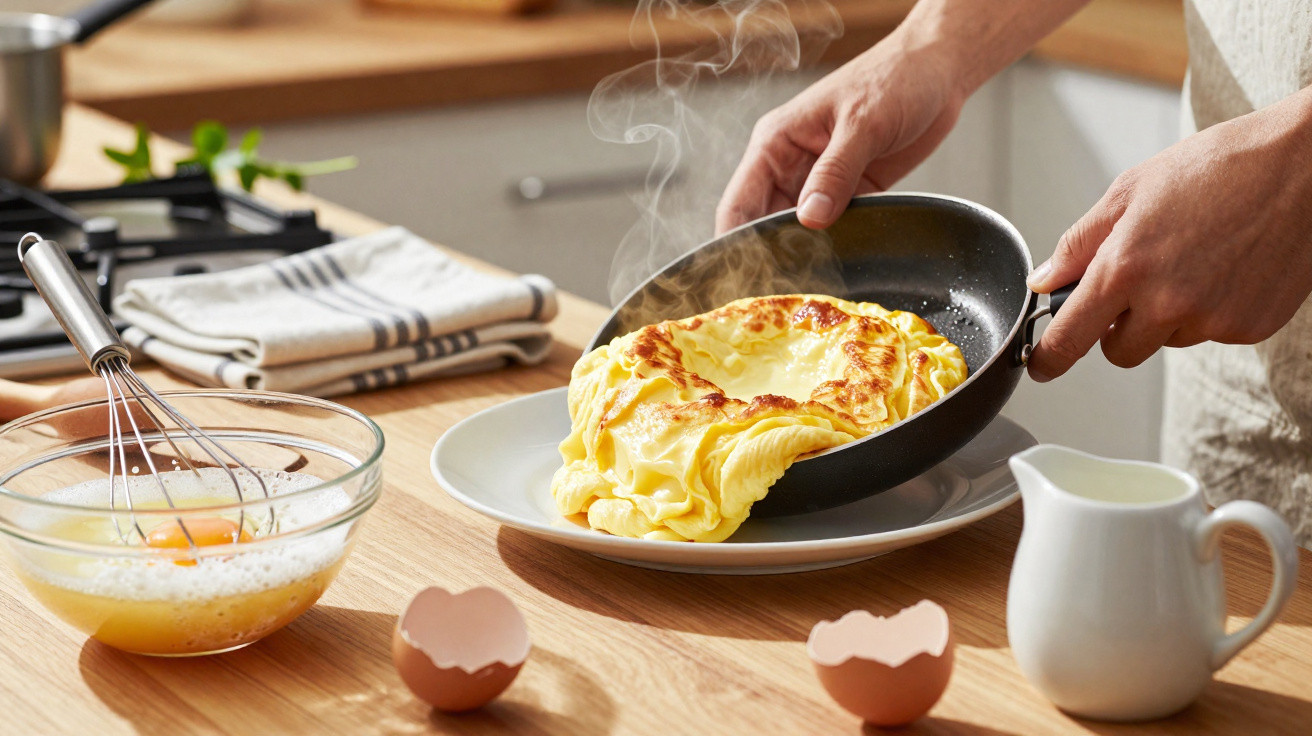
Why most home omelettes stay flat
Aquela omelete alta e leve que costuma aparecer nos brunches não é exclusividade de cozinhas profissionais. Em casa, muita gente faz ovos todos os dias, mas raramente chega a essa textura “de nuvem”.
A diferença está num pequeno ajuste ao método habitual e num ingrediente muito simples. Com uma mudança mínima na rotina, os ovos do dia a dia podem transformar-se numa omelete fofa e macia, com aspeto e sabor de bistro francês.
Most of us beat a few eggs with a fork, throw them in a hot pan, add cheese and call it breakfast. The result tastes fine, but it’s usually thin, dense and sometimes dry around the edges.
That’s because a classic omelette is cooked quickly, with all the egg mixed together. There’s not much air in the mixture, so there’s nothing to “lift” it as it cooks.
Restaurant-style soufflé omelettes work differently. Cooks separate the yolks from the whites, whip the whites to a foam, then fold everything back together. Those tiny bubbles trapped in the whites expand with heat and give lift.
The secret to a puffy omelette isn’t magic, it’s air: trap it in the egg whites, then protect it during cooking.
Two things usually sabotage home attempts:
- Egg whites not whipped enough, or over-whipped until dry and grainy
- Too much filling weighing the mixture down so it collapses
Heat can be a problem too. A very hot pan browns the bottom fast while the centre stays runny, so many people crank the heat further or flip the omelette, which squeezes out the air and flattens it.
The understated ingredient that changes everything
O truque que muitos profissionais usam não passa por um utensílio caro nem por uma frigideira “especial”. É apenas uma colher de sopa de natas líquidas.
A tablespoon of liquid cream whisked into the yolks helps keep the omelette airy, tender and stable once it leaves the pan.
Here’s why this simple addition works so well:
- Fat from the cream gently coats egg proteins, so they don’t tighten too hard and turn rubbery
- Extra moisture turns to steam, which helps the mixture swell as it heats
- A slightly richer base supports the foam from the egg whites, so it doesn’t deflate as quickly
The result is a texture that feels soft and almost mousse-like, but still holds its shape on the plate. You get that restaurant-style slice that stands tall instead of slumping flat.
Step-by-step: from basic eggs to cloud-like omelette
Preparing the egg mixture
For one generous serving, you can follow this simple ratio:
| Ingredient | Quantity |
|---|---|
| Eggs | 3 medium |
| Liquid cream (double or heavy) | 1 tablespoon |
| Butter | 1 small knob |
| Salt and pepper | To taste |
Separate the eggs: whites in one clean bowl, yolks in another. Any trace of yolk in the whites makes them harder to whip, so take a moment to do this carefully.
Whisk the yolks with the cream. Aim for a slightly frothy mixture, pale and smooth. Season with salt and pepper at this stage so you don’t have to stir much later.
Now whip the whites. A hand whisk works, an electric mixer is faster. Beat until soft peaks form: when you lift the whisk, the tip of the foam should curl over, not stand up like a spike.
Folding without losing the air
Drop about a third of the whipped whites into the yolk-and-cream mixture and mix to loosen it up. Then add the remaining whites and fold in gently with a spatula.
The goal is to blend the colours without crushing the foam: wide, slow movements beat frantic stirring every time.
Once there are no big streaks of white left, stop. Over-mixing will undo all your work and send the air back out of the bowl.
The low-and-slow cooking trick
Heat control makes or breaks the omelette
Set a non-stick or well-seasoned pan over medium heat and add the butter. When it foams gently but doesn’t brown, pour in the egg mixture.
Spread it out lightly if needed, then lower the heat. Keeping it at medium-low gives the bubbles time to expand without scorching the bottom.
A lid on the pan turns it into a mini-oven, cooking the centre by steam instead of aggressive direct heat.
Cover the pan and leave the omelette to set for a few minutes. You should see it rise and thicken. The surface will look just set, with a faint wobble in the centre. At this stage, you can serve it as is, or fold it gently in half.
Choosing fillings that won’t weigh it down
Pôr demasiado queijo, fiambre e legumes pode esmagar a espuma delicada. Prefira recheios leves, bem picados e já cozinhados.
- Cheese: a thin layer of grated cheddar, Gruyère or feta crumbled sparingly
- Herbs: chives, parsley or tarragon stirred into the yolks, not into the whites
- Vegetables: mushrooms, onions or peppers cooked beforehand and patted dry
If adding fillings, scatter them on top just before you put the lid on, rather than folding them through the entire mixture. That keeps the base light and lets the omelette rise.
How cream compares with milk and water
Home cooks often stretch eggs with milk or even water. These both add moisture, but they work differently from cream.
- Milk: adds a bit of protein and lactose, but less fat, so the omelette can still turn slightly rubbery if overcooked
- Water: boosts steam and can make eggs lighter, yet offers no richness and can leave a slightly spongy texture
- Cream: brings both moisture and fat, giving a silky feel and better protection against overcooking
If you watch your saturated fat intake, you can use single cream or even half-and-half. You’ll lose a touch of richness, but still gain a more delicate texture than with plain eggs alone.
Handling common mistakes and small risks
Three problems tend to show up the first time people try this technique. They all have easy fixes.
- Omelette stays runny inside: heat was too low or lid came off too early; keep the pan covered another minute
- Bottom burns before it puffs: pan was too hot at the start; preheat gently and reduce the flame as soon as you pour the eggs
- Omelette collapses on the plate: whites were over-whipped or folded too vigorously; stop whipping at soft peaks and fold slower next time
As with any dish relying on beaten egg whites, texture depends on timing. You want to cook the mixture shortly after whipping, before the foam starts to weep liquid and lose volume.
Turning the technique into an everyday habit
Once you’re comfortable with the method, you can adapt it. For a quick weekday breakfast, use two eggs and a teaspoon of cream in a smaller pan. For a brunch centrepiece, double the quantities and cut the finished omelette into wedges, like a cake.
You can also apply the same cream-and-whipped-white idea to other egg dishes. A spoonful of cream and softly beaten whites can lighten a frittata, a crustless quiche or even simple scrambled eggs, giving them a gentle fluffiness without going near a restaurant kitchen.






Comentários
Ainda não há comentários. Seja o primeiro!
Deixar um comentário