
Why your “clean” glasses keep looking cloudy
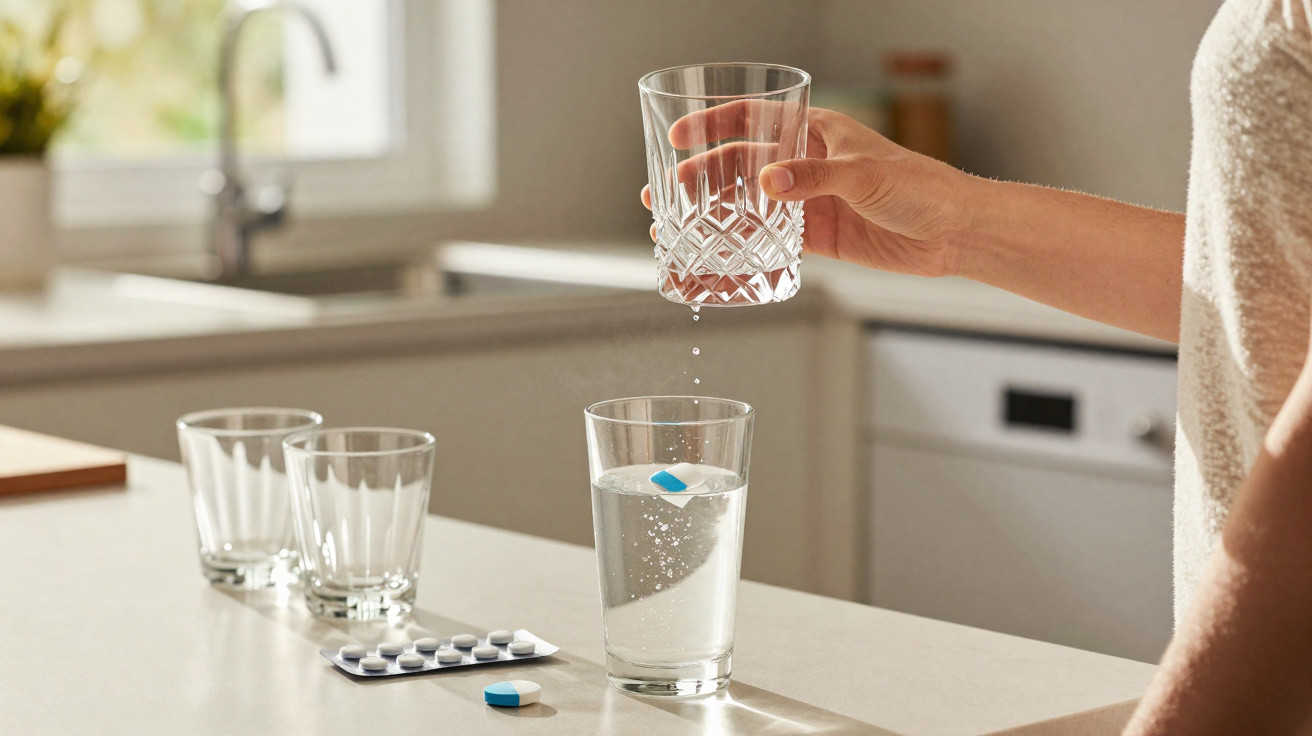
Há um momento irritante que quase toda a gente conhece: tiras um copo do armário, ele parece lavado, mas à luz fica com aquele aspeto baço e esbranquiçado. Em vez de mais esfregadelas e detergente, há um truque simples a circular em muitas casas - deixar os copos de molho durante a noite em água morna com uma pastilha para dentaduras. Parece básico demais, mas assenta na mesma química usada para soltar manchas e película.
A turvação nem sempre significa que o vidro “estragou”. Muitas vezes é apenas uma camada fina de calcário e resíduos que a lavagem normal (à mão ou na máquina) não consegue remover por completo. A chave é perceber o que estás a ver antes de perder tempo com métodos que não resultam.
A cloudy glass usually tells one of two stories, and knowing which one applies saves both time and frustration.
- Mineral deposits: Left behind by hard water rich in calcium and magnesium.
- Etching: Permanent corrosion of the glass surface from harsh detergents or very hot water.
Mineral build-up feels slightly rough, can look milky or streaky, and often worsens over time. Etching, on the other hand, produces a silky, frosted appearance that never fully disappears, even after intensive cleaning.
If the cloudiness wipes off or fades with acid-based cleaners, you’re dealing with deposits, not permanent damage.
This distinction matters. The denture tablet method targets stubborn mineral film and trapped residue, not etched glass. Many households assume their glasses are “ruined” when they’re actually coated in a thin layer of hardened limescale that standard dish soap never fully touches.
How the denture tablet and warm water soak works
Denture tablets were designed to tackle protein stains, tea and coffee marks, and biofilm. Those same ingredients happen to work neatly on cloudy glassware.
| Component in denture tablet | What it does to cloudy glass |
|---|---|
| Effervescent agents (bicarbonate, citric acid) | Create fizz that dislodges film from tiny surface imperfections. |
| Oxygen-based bleach | Breaks down organic stains from wine, lipstick, and food residue. |
| Water softeners | Help loosen mineral deposits that cling after repeated washes. |
The warm water speeds up the reaction, widening microscopic pores and gaps in the mineral layer so the solution can creep in. That gentle mix of fizz, oxygen, and softened water helps lift the cloudy film from the glass rather than scraping it off.
Step-by-step: the overnight cleaning method
The trend circulating on social media keeps the process deliberately simple. Here is the version that cleaning experts say actually holds up in real kitchens.
Preparing the soak
- Fill a large bowl, basin, or sink with warm water, not boiling.
- Submerge the cloudy glasses fully, leaving enough space so they aren’t clinking together.
- Add one denture tablet per 1–2 litres of water, or follow the packet instructions.
As the tablet dissolves, the water turns lightly cloudy and starts fizzing. That bubbling is doing the quiet work that scrubbing often fails to achieve.
The overnight phase
Most users leave their glassware in the solution for at least six hours, often overnight. The longer contact time helps the solution penetrate compacted layers built up over years of dishwashing.
Resist the urge to “help” with abrasive pads. Let the chemistry handle the heavy lifting while you sleep.
Rinsing and finishing
- Remove each glass carefully and rinse under warm running water until it squeaks between your fingers.
- Inspect against a strong light source. If the haze has vanished or improved, you’ve been dealing with deposits.
- Dry with a lint-free microfibre towel to avoid new streaks.
When the cloudiness remains exactly the same, even after a good soak and rinse, you’re probably looking at permanent etching. Chemical tricks rarely fix etched glass, because the glass itself has lost material.
When this method shines – and when it doesn’t
Real-world tests in households with hard water show that the denture tablet soak works best in a few specific scenarios.
Strong candidates for denture tablet rescue
- Glasses used daily in dishwashers with moderate to hard water.
- Vintage glassware that has sat unused but not severely scratched.
- Wine glasses with a faint milky veil, especially near the base.
- Vases and jugs stained where water lines used to sit.
For collectors and keen hosts, the method offers a low-risk way to revive sets that feel too tired for guests but too sentimental to bin.
Warning signs of permanent etching
- Cloudiness that feels perfectly smooth and almost silky.
- Frosted areas concentrated on the very bottom or edges.
- Years of washing with strong detergents and “sanitise” cycles.
No soak can rebuild missing glass. If the surface has been eaten away, you’re looking at cosmetic damage rather than dirt.
In those cases, the overnight soak still has value: it can remove residual film so you clearly see what’s damage and what’s simply dirt. That helps you decide whether to retire the glassware to everyday use and save your best pieces for gentler washing.
Why this simple trick is going viral now
The denture tablet method isn’t actually new. Long-time cleaners and some professional housekeepers have used it quietly for years on tea-stained mugs and coffee carafes. The recent surge in attention comes from a mix of economic pressure, rising water hardness issues, and a cultural shift towards low-labour hacks.
- Cost-of-living pressure: Replacing a whole set of glasses can feel extravagant. A box of tablets costs a fraction of new stemware.
- Hard water creeping into cities: More regions in the US and UK now report limescale problems that used to be rural complaints.
- Time-poor households: An overnight, hands-off solution fits modern schedules better than half an hour of scrubbing at the sink.
On social platforms, users share before-and-after photos that show surprisingly sharp transformations. Not every case ends with crystal-clear perfection, but many see enough improvement to keep the trick in their regular rotation.
Reducing future cloudiness on your glassware
Once the glasses sparkle again, preventing a rapid return of the haze becomes the next challenge. Small tweaks to everyday routines can slow the build-up a lot.
Rethinking dishwasher habits
- Use a glass-friendly cycle with lower temperatures when available.
- Avoid overfilling the machine so detergent can rinse fully away.
- Check salt and rinse-aid levels regularly in hard water areas.
- Skip heavily caustic powders for delicate stemware; choose milder tabs.
For very fine glass, some owners go back to occasional hand-washing with mild liquid soap and warm water, especially for pieces with sentimental or monetary value.
Simple habits that protect the shine
Think of glassware like your skin: frequent, gentle care beats the occasional harsh intervention.
- Rinse wine and juice glasses immediately so pigments don’t set into micro-scratches.
- Avoid scouring pads and gritty cleaners that roughen the surface.
- Dry straight away instead of air-drying in hard water regions.
- Store glasses upright on a clean shelf, not in damp cupboards where film can form.
Other household uses for denture tablets
Once a box of tablets enters the cleaning toolkit, many households start using them beyond cloudy glasses. The same fizzing chemistry helps in spots where narrow shapes or awkward corners trap residue.
- Thermal flasks and travel mugs with coffee build-up.
- Ceramic vases stained at the usual water line.
- Glass kettles with early limescale rings.
- Toilet bowls for a light refresh between deeper cleans.
The advantage lies in the minimal scrubbing. For people with limited mobility or little time, letting a tablet do slow work overnight can make certain chores physically easier and less draining.
Risks, limits and when to think twice
Denture tablets are relatively gentle compared with strong acids or harsh bleaches, but they still carry boundaries.
- Avoid using them on decorated glass with metallic rims or hand-painted details; repeated soaks may fade designs.
- Test on a single, less-loved piece before treating heirlooms or antiques.
- Do not mix denture tablets with other powerful cleaners in the same bowl; reactions can release unwanted fumes.
Treat the first soak as a test, not a miracle cure. Watch how both the glass and any patterns react.
For collectors dealing with expensive crystal, a one-off consultation with a professional restorer or specialist cleaner may still be worth the cost, especially when the pieces carry insurance or auction value.
What this trend reveals about how we clean now
The popularity of this overnight method shows more than a dislike for cloudy wine glasses. It points to a shift in how people manage homes under economic and environmental pressure. Many households want lower-impact solutions that reuse existing products instead of adding yet another specialist cleaner to the cupboard.
The denture tablet soak sits in a sweet spot: cheap, low-effort, and relatively gentle compared with heavy-duty descalers. It also nudges people to think differently about chemistry at home. That fizzing tablet becomes a small, visible reminder that most “magic” cleaning tricks rely on predictable reactions, not secret ingredients.
For anyone considering a kitchen refresh or a move towards more deliberate consumption, this method offers a modest, concrete starting point. Before buying a new set of glasses or another bottle of specific “glass restorer,” a single overnight soak can act as a trial run: a way to see what you can reclaim, what really needs replacing, and where daily habits might quietly shift to keep everything clearer for longer.





Comentários
Ainda não há comentários. Seja o primeiro!
Deixar um comentário