
The quiet epidemic of scratched lenses
Dos e‑mails logo de manhã às viagens de carro à noite, os óculos estão sempre entre nós e o que queremos ver. Com tantas horas de uso, é quase inevitável aparecerem sinais: micro‑riscos, uma névoa fina, películas gordurosas que parecem nunca desaparecer por completo. E quando a frustração aperta, muita gente pega no primeiro produto de limpeza que tem à mão - e é aí que, muitas vezes, o estrago verdadeiro começa.
O problema nem sempre é uma queda ou um acidente óbvio. Na maioria dos casos, vai-se construindo aos poucos, com rotinas aparentemente inofensivas: limpar as lentes na camisola, usar spray de vidros, pousar os óculos com as lentes viradas para baixo. Ao fim de semanas ou meses, o resultado é o mesmo: visão menos nítida e lentes com aspeto “cansado”.
Most lens damage starts at home, not at the optician: the wrong cloth, the wrong liquid, repeated hundreds of times.
Modern lenses, whether for prescription glasses or sunglasses, usually combine lightweight plastic materials with ultra‑thin coatings: anti‑reflective layers, scratch‑resistant films, blue‑light and UV filters. These layers sharpen vision and protect the eyes, but they react badly to heat and harsh chemicals. A lens might survive one or two “bad” cleanings. Do it every day for six months and the coatings begin to dull, peel or crack.
When cleaning does more harm than scratches
Professional opticians draw a clear line between mineral (glass) lenses and plastic lenses. Glass resists scratches better but feels heavier; plastic weighs less and offers more options for coatings, yet shows wear faster. Both types share one weak point: their surface treatments.
Household cleaners often contain alcohol, ammonia, strong degreasers or polishing agents. These ingredients work brilliantly on kitchen tiles or car windscreens. On lenses, they slowly eat away the protective films that stop glare and fingerprints.
That “perfect shine” after using window cleaner usually means the top layer has already started to dissolve.
Data from repair centres show that a significant share of costly lens replacements stem not from accidents, but from years of overly aggressive cleaning. The lenses themselves remain structurally intact. It’s the coatings that fail, forcing users to buy new pairs long before they should.
The baking soda trick: gentle abrasion that actually works
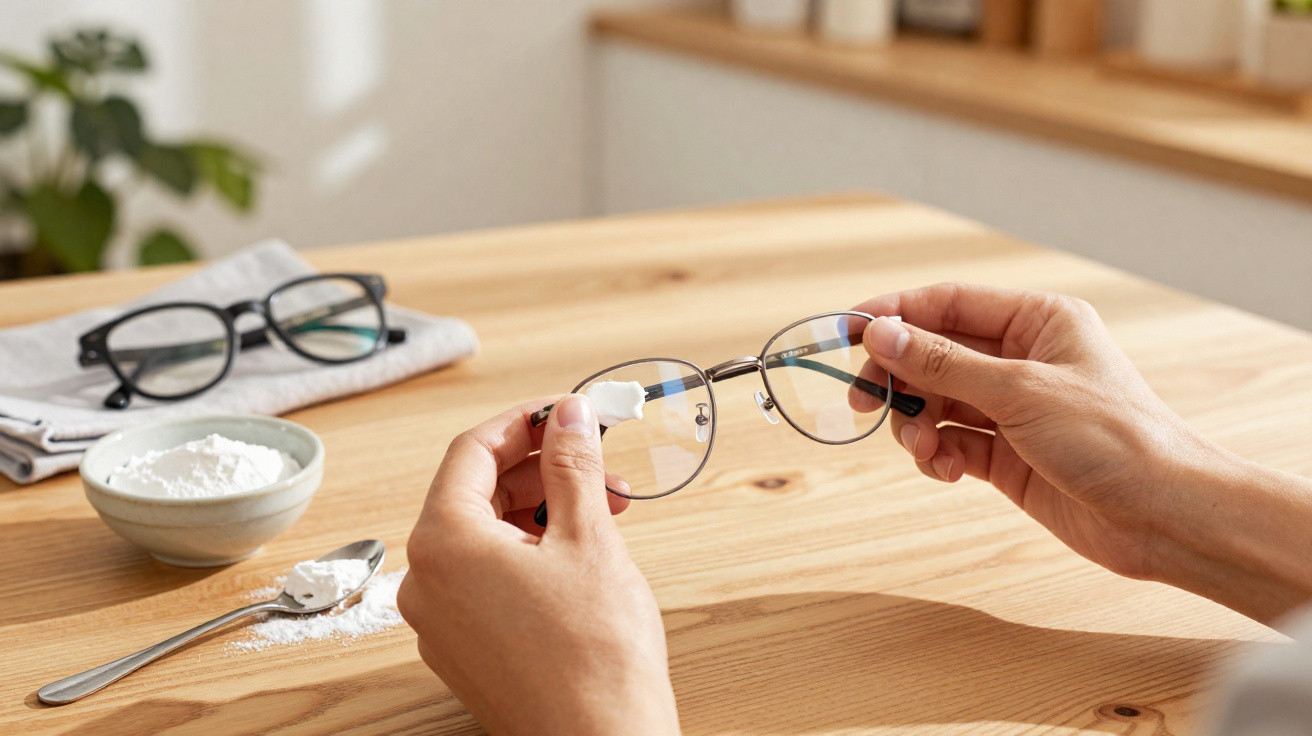
Against that backdrop, one simple, low‑cost method has steadily gained backing from independent labs and many opticians: a paste made from baking soda and water. When used correctly on plastic lenses with light, superficial scratches, it can improve clarity in a visible way without stripping the coatings.
How to use baking soda on scratched glasses
- Mix two parts baking soda with one part cold water until you get a creamy paste.
- Place a small amount on each lens.
- Using a clean microfibre cloth, rub the paste gently in small circular movements for around 10 seconds.
- Rinse thoroughly with cold water.
- Dry with another clean microfibre cloth, again using soft circular motions.
The key is the controlled abrasiveness of baking soda crystals suspended in water. They lightly polish the very top of the plastic surface, smoothing micro‑scratches and lifting stubborn residues that standard cleaning sprays tend to leave behind.
When used sparingly, baking soda behaves like a micro‑polisher: it refreshes the surface instead of grinding through it.
Cost per application stays well under the price of a single lens wipe, which resonates with households balancing rising bills and everyday expenses. Even so, opticians point to two clear limits: it only helps with minor, surface‑level marks, and it shouldn’t be done daily. Treat it as an occasional tune‑up, not your regular wash.
Neutral toothpaste: a risky cousin of the same idea
On social media, toothpaste is often presented as a miracle fix for scratched sunglasses. The reasoning sounds close to baking soda: a mildly abrasive paste should polish the surface. In reality, outcomes vary a lot, ranging from “decent improvement” to “permanently damaged”.
Independent tests on commercial toothpastes show three very different outcomes, depending on the formula:
| Method | Effect on light scratches | Risk to coatings |
|---|---|---|
| Baking soda + water | Noticeable visual improvement | Low |
| White, non‑gel toothpaste | Moderate improvement | Medium |
| Soap or glass cleaner | Little or negative effect | High |
Only a narrow group of toothpastes with low concentrations of calcium carbonate or fine silica can polish without clouding modern UV and anti‑blue‑light coatings. Many whitening or “extra‑fresh” variants include stronger abrasives and additives that leave lenses dull, streaked or permanently misty.
Toothpaste can work in theory, but the margin between “slight improvement” and “irreversible haze” is thin.
For that reason, many optical professionals accept baking soda as a cautious at‑home option, but remain wary of toothpaste except on very cheap, uncoated sunglasses where the stakes are lower.
The oil illusion: neat lenses for a short afternoon
Another popular hack involves rubbing a tiny amount of petroleum jelly or olive oil onto scratched glasses. This works in a completely different way. Rather than polishing, the oil briefly fills the grooves, bending light more evenly and making scratches less noticeable.
The result can look surprisingly good in the mirror, especially under soft indoor light. But the film is delicate. Within hours, it attracts dust, skin oils and fingerprints, leaving the lenses greasy and fog‑prone.
Oil doesn’t heal the wound; it simply puts make‑up over it, then gathers every speck of dirt in the room.
Technicians see it as nothing more than a stopgap. If you’ve just scratched your sunglasses while away and don’t have proper cleaning tools, a minimal touch of oil might help for a long drive. Once you’re home, the lenses should be cleaned properly and checked: deep scratches that affect vision need professional support, not cosmetic masking.
Five habits that prevent most new scratches
Insurance data suggest that around seven in ten accidental lens damages happen not during sports or travel, but in everyday handling: dropping glasses on a nightstand, tossing them into a bag without protection, or wiping them with rough paper towels.
- Always store glasses in a rigid, padded case instead of a soft pouch or loose pocket.
- Remove them with both hands to avoid twisting the frame and stressing the lenses.
- Place them with the lenses facing up on flat, clean surfaces only.
- Use microfibre cloths made for optics, never tissues, kitchen roll or clothing.
- Keep them away from dashboards, radiators or any heat source above roughly 40°C.
These small habits, repeated every day, can easily add years of comfortable use to a single pair of glasses. That matters when a set of prescription lenses can cost as much as a short weekend break.
The hidden economics of clear vision
Across the UK, US and much of Europe, replacing mid‑range prescription lenses typically runs from the equivalent of £80 to £220, depending on thickness, coatings and brand. For families with several spectacle wearers, that figure multiplies quickly, especially when children’s prescriptions change every year or two.
Good lens care functions like routine boiler servicing or tyre checks: dull but quietly effective at avoiding big bills later.
Preventive care also reduces waste. Scratched lenses often end up in landfill even though only their top layers failed. Extending the lifespan of each pair reduces the amount of plastic, chemical coatings and packaging that ends up in the environment. For households trying to live more sustainably, lens care may seem minor, but it has a real environmental upside.
When a home fix is not enough
Some warning signs are a clear cue to stop DIY tricks and let a professional take over. If scratches are deep enough to catch a fingernail, they’re usually beyond what baking soda polishing can handle. If you see rainbow patterns, peeling edges or “bubbles” on the surface, the coating may be separating from the lens.
Changes in comfort also count. Headaches, eye strain or increased glare at night can mean the damage is more than cosmetic. In those situations, opticians can advise whether a professional re‑polish, recoating or full replacement is the best route, and whether any of the cost is covered by warranty or insurance.
Beyond glasses: applying the same logic elsewhere
The basic principles behind the baking‑soda trick also apply to other everyday items. Phone screens with plastic protectors, watch faces, and even some camera filters can respond similarly: a very mild abrasive may buff out fine surface marks, while aggressive cleaners destroy coatings. Always check the manufacturer’s guidance first, since camera lenses and coated screens can be more sensitive than spectacles.
For anyone who depends on clear vision-drivers, people who work on screens, students-the trade‑off is straightforward. A few careful minutes with the right materials, plus avoiding “shortcut” products like glass cleaner or harsh soap, can keep lenses usable much longer. That small routine protects both visual comfort and the household budget, without the annoyance of yet another pair of scratched, cloudy glasses left at the back of a drawer.





Comentários
Ainda não há comentários. Seja o primeiro!
Deixar um comentário